Oueslati and Sahli: The Tunisian Varieties to Discover
 Article
In brief. Tunisia is not limited to Chemlali and Chetoui. Oueslati (centre of the country, Kairouan/Ouslatia region) gives a balanced oil, with medium fruitiness and controlled pungency, regularly awarded at international competitions — a fine alternative premium option. Sahli (a coastal/Sahel variety) broadens the palette further, but its precise profile remains to be confirmed by the certificate of analysis (COA) lot by lot. Two varieties to discover to step off the beaten track.
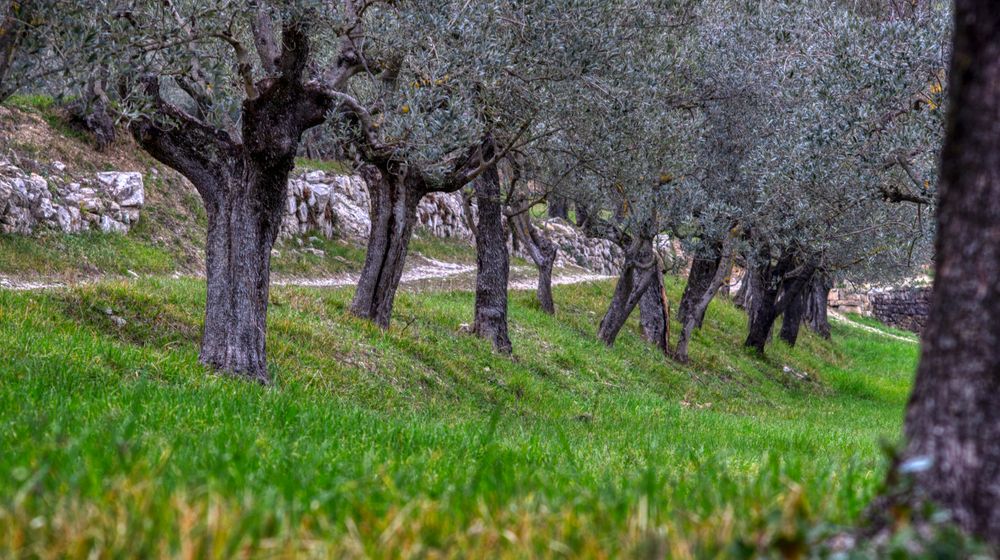
Tunisia has an olive orchard of rare varietal richness, often millennia-old and little-intensive. While Chemlali and Chetoui dominate the volumes, other varieties deserve the attention of a buyer looking to differentiate their range. Oueslati and Sahli are among them.
Why look beyond Chemlali and Chetoui?
Chemlali (South, ~80% of the Tunisian orchard) and Chetoui (North) cover the majority of the supply. But an importer or brand builder wanting to stand out has an interest in exploring the secondary varieties: they offer less widespread sensory profiles on the market and a credible rarity argument.
These varieties remain produced in more limited volumes. They are therefore better suited to premium, single-variety series or signature blends than to mass-market volume. It is a positioning choice, not a tonnage one.
Oueslati: rewarded balance
Oueslati takes its name from the Ouslatia region, in central Tunisia (Kairouan governorate). It is a variety renowned for its balance: medium fruitiness, pungency and bitterness present but controlled, without excess. Where Chemlali plays on mildness and Chetoui on intensity, Oueslati sits in the middle.
This balance makes it a consensual and elegant oil, appreciated in tasting. Oueslati regularly features among the Tunisian oils awarded at international competitions, which makes it a good support for quality storytelling.
Indicative profile of Oueslati
| Criterion | Oueslati (indicative) |
|---|---|
| Region | Centre, Ouslatia / Kairouan |
| Fruitiness | Medium, rather green to ripe |
| Pungency | Medium, controlled |
| Bitterness | Medium |
| Polyphenols | To be confirmed per lot (COA) |
| Positioning | Balanced premium, signature single-variety |
These benchmarks are indicative: the actual profile depends on the precise terroir, the harvest date and the extraction. It is always verified by the COA of an IOC-approved laboratory. See the dedicated Oueslati page.
Sahli: a variety to confirm
Sahli is a variety associated with the Tunisian coast (the Sahel). It completes the country's varietal mosaic, but we prefer to stay honest: its precise sensory and analytical profile is to be confirmed case by case.
Rather than putting forward approximate figures, the right B2B approach is to:
- Request a reference sample identified as Sahli.
- Demand the COA of the lot (acidity, peroxide, K232/K270, ideally polyphenols).
- Taste or have it tasted to validate the actual sensory profile.
- Confirm availability in volume and consistency before any commitment.
This is true for Sahli as for any niche variety: the variety sheet gives a direction, but only the lot is authoritative. Never commit a container on a varietal reputation without a sample or an analysis.
Single-variety or blend: where to place these varieties?
Oueslati and Sahli can be considered in two ways:
- As single-variety — for a signature range that highlights a rare variety and its terroir. The differentiation argument is strong, the traceability clear.
- In a blend (coupage) — to bring a note of balance (Oueslati) or a local touch to a Chemlali/Chetoui-dominant blend, while adjusting the taste and the polyphenol content.
Our variety selector helps you choose according to your market and your positioning.
Which Tunisian variety for which project?
- Volume and accessible price → Chemlali.
- Intense character and high polyphenols → Chetoui.
- Premium balance and differentiation → Oueslati.
- Exploring a local niche → Sahli, after validation by sample and COA.
All these varieties exist in certified organic (EU 2018/848, Ecocert; USDA NOP for the USA), the Tunisian orchard lending itself well to it.
FAQ — Oueslati and Sahli varieties
What is Oueslati olive oil?
Oueslati is an olive variety from central Tunisia (Ouslatia region, Kairouan). It gives a balanced oil: medium fruitiness, controlled pungency and bitterness. Regularly awarded at international competitions, it suits a differentiating premium positioning.
Is Oueslati better than Chetoui?
Neither better nor worse: different. Chetoui is intense and very rich in polyphenols; Oueslati relies on balance and elegance. The choice depends on your market — strong character or consensual premium profile.
What is the profile of Sahli oil?
Sahli is a variety of the Tunisian coast. Its precise profile remains to be confirmed case by case: we recommend requesting a sample and the certificate of analysis (COA) of the lot before any commitment, rather than relying on generic benchmarks.
Are these varieties available in large volumes?
They are produced in more limited volumes than Chemlali and Chetoui. They are therefore mainly suited to premium or niche series. The actual availability and consistency must be confirmed before ordering.
Can Oueslati or Sahli be obtained in organic?
Yes, subject to availability. The Tunisian orchard lends itself well to the organic production method (EU 2018/848, Ecocert; USDA NOP for the USA). Organic certification is confirmed per lot and per producer.
How to verify the quality of a niche variety?
Always by reference sample + COA from an IOC-approved laboratory, complemented by a tasting. The variety sheet gives direction; only the analysed and tasted lot commits. This is the rule for any variety, dominant or secondary.
Looking to differentiate your range with a rare Tunisian variety? Request a quote: specify the target variety (Oueslati, Sahli or blend), the volume, the format and the incoterm. We respond within 24-48h with a dated quotation, a reference sample and its COA — to confirm the profile before any commitment. Also explore all our Tunisian olive oil varieties.
- Chemlali vs Chetoui: two Tunisian oil profiles
- Cold extraction: from fruit to oil, step by step
- Monovarietal vs blend: which to prefer for your olive oil
- Aromatic profiles of Tunisian olive oils
- The olive harvest in Tunisia (October–December)
- Tunisian Terroir: Why Millennia-Old Olive Trees Matter