Choosing the Packaging Format for Your Branded Olive Oil
 Article
In brief. The right packaging protects the oil from its two enemies — light and oxygen — while serving your positioning. Dark glass is the premium benchmark (light protection, image), tin protects perfectly from light at a controlled cost, PET is economical but less protective, and bag-in-box limits oxidation after opening on large formats. Choose based on the target shelf life, the cost per litre and the brand message. Dark glass 250-750 ml for premium, tin 3-5 L for loyalty/volume.
Once your oil is chosen and its OEM packaging framed (see OEM packaging), one decision remains that affects both perceived quality and shelf life: the container. This choice, on the brand side, isn't cosmetic — poor packaging degrades an excellent oil within months. Here's how to decide.
The two enemies to fight: light and oxygen
Olive oil oxidises with light and contact with air. Good packaging:
- Blocks light (especially UV), which accelerates rancidity.
- Limits contact with oxygen, before and after opening.
- Stays neutral to taste (no migration).
Everything else — image, cost, ergonomics — comes after this basic function. To understand how these factors affect the best-before date, see preservation and shelf life.
Comparison of the four containers
| Container | Light protection | Oxygen protection | Cost/L | Positioning |
|---|---|---|---|---|
| Dark glass (green/amber) | Good | Good (sealed) | High | Premium, gift |
| PET (plastic) | Low to medium | Medium | Low | Volume, entry-level |
| Tin (can) | Excellent (opaque) | Good | Medium | Terroir, volume, loyalty |
| Bag-in-box | Excellent | Excellent after opening | Medium | Large formats, HORECA |
Dark glass — the premium benchmark
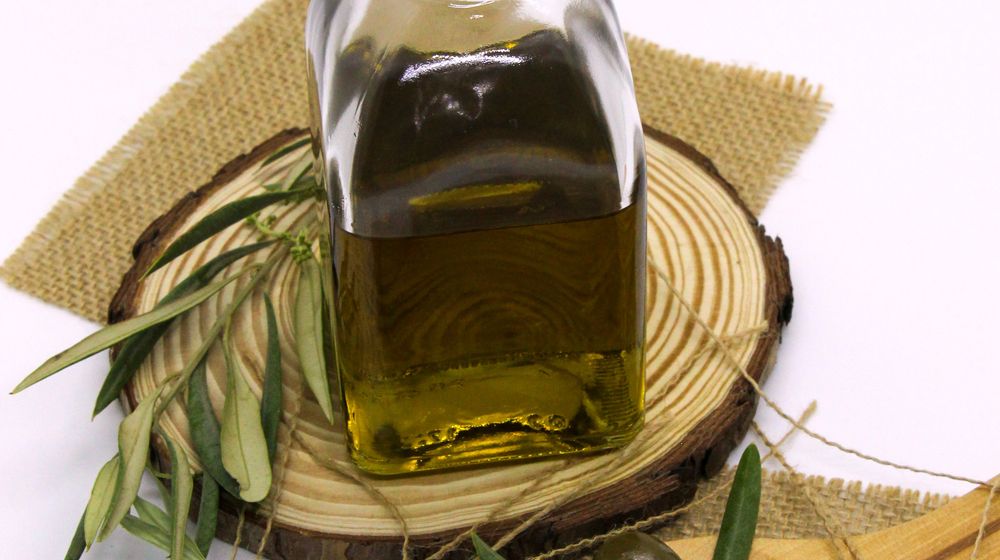
Green or amber tinted glass filters light and conveys a high-end image. Ideal in 250 to 750 ml for premium shelves and gifting. Drawbacks: heavy, fragile, higher transport and packaging cost. Clear glass, on the other hand, should be avoided for a keeping oil: it offers no light protection.
PET — the economical option
Light, unbreakable, cheap: PET suits the entry-level and volumes. But it protects poorly from light (unless tinted/opacified) and lets some oxygen through over time. Reserve it for fast-turnover oils, not premium keeping oils.
Tin — the best protection/cost ratio
The metal can is fully opaque: perfect light protection. Robust, stackable, it carries an authentic "terroir" image. Formats 500 ml to 5 L are in high demand for loyalty and in southern markets. Tin is often the most rational choice for those who want protection without paying the price of glass.
Bag-in-box — the large-format anti-oxidation
The flexible pouch retracts as you pour: the oil stays little exposed to air even after opening. Excellent for the 3 to 5 L intended for foodservice or families. Less premium on the shelf, but unbeatable on preservation after opening of large formats.
Which format for which objective?
- 250 ml: tasting, gift, discovery — dark glass, high perceived value per litre.
- 500 ml: standard gift/premium format — dark glass or tin.
- 750 ml – 1 L: core retail range — dark glass (premium) or tin (volume).
- 3 L – 5 L: loyalty, families, HORECA — tin or bag-in-box.
Multiplying formats multiplies costs (moulds, MOQ, labels): start with two formats consistent with your positioning, then expand.
Cost, premium and volume: trade-offs
The container can weigh as much as the oil itself. On a base oil at ~€3.80/kg FOB Tunisia, dark glass packaging + tamper-proof cap + a well-crafted label adds significantly to the unit cost — justified only if your positioning values it. Conversely, tin or PET frees up margin for the price or distribution. The rule: the packaging must match the oil and the selling price, neither above (crushed margin) nor below (broken image). Track the origin rate on the price observatory to frame your cost structure.
FAQ
What is the best packaging to preserve olive oil?
Tin (opaque) and dark glass offer the best protection against light, the main oxidation factor. For large formats, bag-in-box protects best after opening because the pouch limits contact with air. Clear glass should be avoided for a keeping oil.
Dark glass or PET for a premium brand?
Dark glass, no question. It protects better from light and carries a high-end image that justifies a higher price. PET suits the entry-level and fast-turnover volumes, but its image and protection don't support a premium positioning.
Why use tin for olive oil?
The tin can is fully opaque: it completely blocks light, the oil's first enemy. Robust, stackable and cost-controlled, it carries an authentic terroir image. It's often the best protection/cost ratio, especially on 1 to 5 L loyalty formats.
Which formats to choose to launch a range?
Start with two consistent formats: a small one (250-500 ml) for gift and discovery with high perceived value, and a medium one (750 ml-1 L) for the core range. Add a large format (3-5 L) only if you target loyalty or foodservice. Multiplying formats multiplies costs.
Is bag-in-box suitable for premium olive oil?
It's excellent for preservation after opening on large formats (3-5 L) intended for families or foodservice, because the pouch limits contact with air. On the other hand, its image is less premium on the shelf: reserve it for volume and HORECA rather than high-end gifting.
How much does packaging add to the cost of a bottle?
It varies greatly by container: dark glass packaging with a tamper-proof cap and a well-crafted label can weigh as much as the oil, while tin or PET stays far more economical. The rule: the packaging must match the target selling price, no more, no less.
Designing the range for an olive oil brand? Request a quote: we quote by format and container, from 250 ml to 5 L, with your-brand packaging. Discover our private label offer and the OEM process.
- Launching your olive oil brand: the 2026 guide
- Private label vs own brand: which to choose
- National brand vs private label: two strategies
- MOQ and costs of a private label project
- Private label (MDD): how to get listed
- OEM packaging: formats, bottles, cans