Sahli Olive Oil: the Southern Tunisian Variety
 Article
What is the Sahli variety?
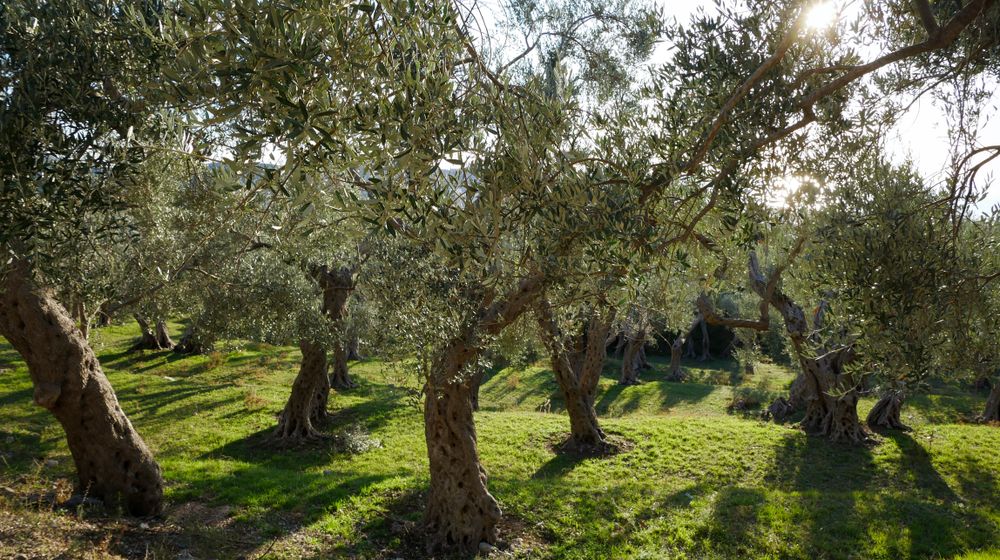
Sahli is an olive variety from southern Tunisia, grown in the country's southern olive-growing zones. Like the other varieties of the arid South, it benefits from a terroir with low pest pressure, suited to low-intensity management and organic production. It rounds out the Tunisian varietal palette alongside the major varieties: Chemlali (dominant), Chetoui (North) and Oueslati (Central).
At Zitouna Export, Sahli is supplied in flexitank, IBC or drums ex Sfax/Radès, with a certificate of analysis (COA) per lot. The precise characteristics of each lot (sensory profile, acidity, polyphenols) are confirmed by the COA of the IOC-accredited laboratory.
ℹ Sahli is a local variety of the South that is less documented than the major commercial Tunisian varieties. The profile data below is indicative and to be verified lot by lot at COA — we do not communicate any unconfirmed figure.
Organoleptic profile of Sahli oil
The exact sensory profile of Sahli varies with the southern terroir, the maturity at harvest and the campaign. As a variety of the South, it belongs to a family of rather fluid oils, but its precise profile (fruitiness, pungency, bitterness) must be validated by tasting and the COA panel of each lot.
| Sensory attribute | Sahli (indicative) | Comment |
|---|---|---|
| Fruitiness | To be confirmed per lot | Southern profile, to be validated at panel |
| Pungency (peppery) | To be confirmed per lot | Generally moderate for southern varieties |
| Bitterness | To be confirmed per lot | To be validated at the sensory panel |
| Texture | Rather fluid | Typical of southern Tunisian oils |
Sensory profile to be confirmed lot by lot: we do not publish unverified figures. The COA panel is authoritative. Compare available varieties with our variety selector.
For a documented and predictable profile, turn to Chemlali (mild), Chetoui (intense, high in polyphenols) or Oueslati (balanced, award-winning). Sahli is to be considered based on availability and a validated sample.
Region, harvest and terroir
- Production region: southern Tunisia, southern olive-growing zones.
- Harvest (olive campaign): in autumn–winter, like most of the Tunisian grove, depending on maturity and zone.
- Terroir: arid climate, low pest pressure — conditions naturally suited to organic.
- Availability: a more niche variety than Chemlali; volumes are confirmed depending on the campaign and zone.
Typical acidity and polyphenols
On cold extraction of sound olives, Sahli can give an extra virgin oil compliant with the IOC/T.15/NC standard and EU regulations. Exact values are established at the COA of each lot.
| Parameter | EVOO threshold (IOC/EU) | Sahli (to be confirmed at COA) |
|---|---|---|
| Free acidity (% oleic acid) | ≤ 0.80% | verified per lot |
| Peroxide value (mEq O₂/kg) | ≤ 20 | verified per lot |
| K232 | ≤ 2.50 | verified per lot |
| K270 | ≤ 0.22 | verified per lot |
| Sensory panel | Md = 0, Mf > 0 | verified per lot |
| Polyphenols | — (EFSA claim ≥ 250 mg/kg) | testing on request, to be confirmed per lot |
Sahli and polyphenols
Sahli's polyphenol content is not stably documented in the general literature: it must be measured lot by lot. If your positioning requires a high level (≥ 250 mg/kg for the EFSA health claim), Chetoui remains the safe bet. For Sahli, request polyphenol testing at COA. Check eligibility with our COA quality classifier.
Uses & target markets
As a more niche southern variety, Sahli is aimed at buyers seeking a specific varietal origin or a blend:
- Brand builders / private label — storytelling around a local southern variety (see private label).
- Blends — a varietal contribution in an assembly, depending on the validated profile.
- Importers / bottlers — sourcing a southern profile, subject to availability.
- Organic markets — a southern terroir suited to organic.
For large regular volumes and a predictable profile, Chemlali remains the standard export base. Compare with world varieties on our world varieties comparison.
Typical COA — Sahli olive oil
Each lot is analysed by an IOC-accredited laboratory (ONH analysis mandatory for Tunisian export) and delivered with its COA. Typical template (values filled in per lot, not fabricated):
LOT: ZE-SAHL-2026-XX Variety: Sahli (South)
Free acidity........... __ % (EVOO ≤ 0.80%) [per lot]
Peroxide value......... __ mEq (≤ 20) [per lot]
K232................... __ (≤ 2.50) [per lot]
K270................... __ (≤ 0.22) [per lot]
Panel: Md / Mf → Category: [per analysis] [per lot]
Polyphenols............ __ mg/kg (EFSA ≥ 250?) [on request]
Profile: to be established at the lot's sensory panel
We fill in the actual values of the delivered lot — no figure is communicated in advance without analysis. Interpret your COA with the COA quality classifier.
FAQ — Sahli olive oil
What is Sahli olive oil?
Sahli is an olive variety from southern Tunisia, more niche than the major commercial varieties (Chemlali, Chetoui, Oueslati). It yields an olive oil whose precise profile is confirmed lot by lot at COA.
What does Sahli oil taste like?
As a variety of the South, it belongs to a family of rather fluid oils, but its exact fruitiness, pungency and bitterness must be validated by tasting and the COA panel. We do not publish an unverified quantified profile.
Where is Sahli grown?
In southern Tunisia, southern olive-growing zones, under an arid climate with low pest pressure — favourable to organic production.
Is Sahli high in polyphenols?
Its content is not stably documented: it is measured lot by lot at COA. For a guaranteed high level (≥ 250 mg/kg, EFSA claim), Chetoui is the safe bet.
Sahli or Chemlali: which to choose?
For a documented, predictable profile available in volume, choose Chemlali. Sahli is to be considered for a specific varietal need or a blend, based on availability and a validated sample.
What is Sahli's typical acidity?
The free acidity of an extra virgin must be ≤ 0.80% (IOC/EU standard). The exact value of each Sahli lot is established at the COA of the IOC-accredited laboratory. We do not communicate any unmeasured figure.
Is Sahli available organic?
Yes, subject to availability. The arid terroir of southern Tunisia is naturally suited to organic. Our oil is available organic certified by Ecocert (EU 2018/848), USDA NOP and EU Organic. See organic olive oil in bulk.
In which bulk formats do you deliver Sahli?
In flexitank (~22,000 L), IBC (1,000 L) or drums (~200 L), up to a full container, subject to campaign availability. Indicative MOQ: 1 flexitank, 2 IBC or 10 drums.
What is the price of bulk Sahli olive oil?
The bulk price at Tunisian origin starts around 3.80 €/kg FOB, depending on the availability of this variety, the volume, the incoterm and the campaign. Request a dated quote.
Is Sahli always available?
Not necessarily. It is a more niche variety than Chemlali; its availability in volume depends on the campaign and zone. We confirm availability and provide a sample before any commitment.
Can I get a Sahli sample before ordering?
Yes, and it is recommended for this variety: we provide a reference sample with its COA (sensory profile and, on request, polyphenols), a contractual basis to validate the profile before ordering.
Which Tunisian variety should I choose if I am new to importing?
For a first order, favour a variety that is documented and available in volume: Chemlali (mild, volume), Chetoui (polyphenols, EFSA) or Oueslati (balanced, award-winning). Sahli comes in as a complement depending on your needs.
Request your bulk Sahli quote
Volume, format (flexitank/IBC/drum), incoterm, destination market, organic or conventional: tell us your needs. For Sahli, we first confirm availability and send you a validated sample with its COA before any firm quote.
Request a quote — drawer pre-filled with "Sahli variety (South)".
Variety selector: torn between Sahli, Chemlali, Chetoui and Oueslati? Use our variety selector to find the profile suited to your market.
Lead magnet: download our Guide to Tunisian Olive Varieties (profiles, polyphenols, uses, prices).
- Bulk Virgin Olive Oil | Zitouna Export
- Bulk Extra Virgin Olive Oil | Zitouna Export
- Olive Oil Export Formats: Flexitank, IBC, Drum | Zitouna
- Flexitank Olive Oil: ~22,000 L in bulk | Zitouna
- Olive Oil Drums: 200-216 L, small lots | Zitouna
- IBC Olive Oil: 1000 L tank in bulk | Zitouna